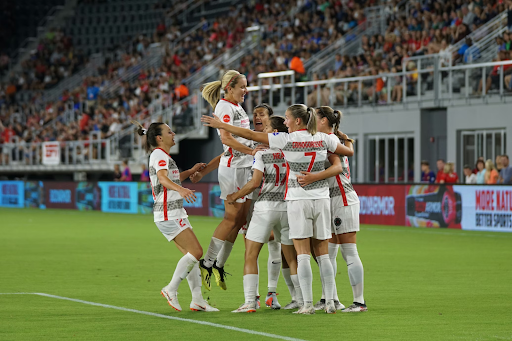
Women’s football didn’t explode into global popularity overnight. It was built on the backs of players who pushed forward long before stadiums were packed, broadcasts were widespread or clubs invested in the women’s game. These early pioneers changed how the world saw the sport, not just by winning trophies, but by redefining who belonged on the pitch and what women’s football could become.
This guide introduces readers to the remarkable athletes who shaped the women’s game into the powerhouse it is today. Their influence runs deeper than highlights or stat sheets. They shifted culture itself, creating the foundation for the booming movement modern fans, including those filling stadiums in New York, are part of today.
Early Foundations
Before there were leagues, sponsorships or national broadcasts, women were already playing football in packed stadiums across Europe and beyond. In the early 20th century, teams like England’s Dick, Kerr Ladies drew tens of thousands of spectators, proving long before modern headlines that there was demand for the women’s game. Yet these early teams faced bans, societal pressure and a lack of institutional support, forcing many players to compete in informal leagues or charity matches just to keep the sport alive.
Out of this era emerged a generation of quietly radical athletes – women who played simply because they loved the game, even when resources were scarce, and recognition was limited. Their persistence kept women’s football from disappearing entirely during some of its most challenging decades.
Barrier Breakers and Global Icons
Some players didn’t just excel on the pitch – they changed the trajectory of the women’s game entirely. These athletes became symbols of possibility, raising standards, shifting public perception, and expanding the sport’s global reach.
Marta (Brazil)
Often regarded as the greatest to ever play the women’s game, Marta fused creativity, flair and relentless competitiveness. Her six FIFA World Player of the Year awards, a record across both men’s and women’s football, elevated global expectations for excellence. More importantly, she became a powerful advocate for equity in the sport, inspiring young players far beyond Brazil.
Michelle Akers (United States)
A cornerstone of the early USWNT, Akers helped define the physical, determined, attack-minded style that would propel the team into global dominance. Her leadership during the 1991 and 1999 World Cups showcased what women’s football could look like on the world stage and helped cement the U.S. as a powerhouse in the sport.
Mia Hamm (United States)
Few players captured the imagination of a generation like Mia Hamm. Her skill, humility and visibility made her one of the first global superstars of the women’s game. For many fans, especially in the U.S., Hamm was the face of possibility – proving that women could headline international tournaments, influence culture, and lead a movement.
Sun Wen (China)
One of the most technically gifted players of her era, Sun Wen brought global attention to Asian women’s football. Her performances during the 1999 World Cup captivated audiences and highlighted the sport’s growing global parity. She showed the world that elite women’s football existed far beyond Europe and the Americas.
Homare Sawa (Japan)
Sawa’s career culminated in Japan’s historic 2011 World Cup win, a victory that expanded the sport’s global footprint and inspired a new wave of players across Asia. Her leadership, consistency and brilliance affirmed that the women’s game had entered a truly international era – one where talent and tactical sophistication thrived worldwide.
Changing the Game Off the Field
The pioneers of women’s football didn’t limit their impact to the 90 minutes on the pitch. Many fought for wage equity, pushed governing bodies to take the women’s game seriously, and used their influence to secure better facilities, youth pathways, and career opportunities for future generations.
Their advocacy reshaped the sport’s infrastructure, enabling the creation of professional leagues and encouraging federations to invest in coaching, training, and development. They helped normalize the idea that women deserve equal resources and opportunity in sport – a fight that continues today.
Fans have also become part of this cultural shift. Wearing women’s soccer jerseys, buying merchandise, tuning in to matches and supporting new clubs has created economic momentum that fuels growth at every level.
The Modern Movement
The foundation built by early trailblazers has opened the door for a new generation of players who are pushing women’s football into an unprecedented era of visibility and global excitement. Today’s stars grew up watching pioneers like Hamm, Sawa and Marta, and now they’re expanding what the sport can be.
Players like Alex Morgan continue the fight for pay equity and professional standards, using their influence to push federations and leagues toward long-overdue progress. Sam Kerr has redefined what center-forward play looks like, bringing flair, power and expressive individuality to the global stage. Ada Hegerberg became the first-ever Ballon d’Or Féminin winner and remains one of the sport’s strongest voices for fairness, investment and structural reform.
Together, this new wave of leaders reflects a fully modern era of women’s football, one driven by purpose as much as performance. Their presence on billboards, in social feeds, and in sold-out stadiums shows how mainstream the women’s game has become.
How Brooklyn FC Connects Fans to the Future of the Women’s Game
New York has always been a city defined by ambition, energy and reinvention – qualities that echo throughout the women’s game. It’s no surprise that the city has become a thriving hub for soccer fans who want to be part of the sport’s next chapter.
As part of the USL women’s ecosystem, Brooklyn FC serves as a bridge between the sport’s historic trailblazers and the rising talent shaping its future. Matches at Maimonides Park offer a chance to experience this movement firsthand, from promising players making their mark to local fans creating an atmosphere that rivals some of the best soccer cities in the country.
For newer fans, attending a Brooklyn FC match is a great way to deepen your connection to the sport’s history. The same resilience and brilliance that defined early pioneers show up in every sprint, pass and tackle on the pitch. And by showing up, wearing team colors, supporting players, joining a growing community, fans help write the next chapter of the women’s game.
If you want to feel the roots and the rise of women’s football all at once, there’s no better place than Maimonides Park. Head to Coney Island, catch a match and be part of the movement shaping the future of the sport.
FAQs
1. Who are the most influential pioneers in women’s football?
Players like Marta, Michelle Akers, Mia Hamm, Sun Wen and Homare Sawa helped redefine excellence and push the sport into the global spotlight.
2. How is Brooklyn FC contributing to the growth of women’s soccer?
Brooklyn FC provides a professional, community-rooted platform for rising women’s talent, giving New York fans a direct way to support the sport’s future.
3. Where can I watch women’s soccer games in New York?
You can catch live matches at Maimonides Park in Coney Island, home of Brooklyn FC, along with other soccer-friendly venues throughout the city. Get tickets here.
4. Does Brooklyn FC sell women’s soccer jerseys or merch?
Yes, Brooklyn FC offers jerseys and official merch that let fans celebrate the club’s identity and support women’s soccer culture. Check out the merch store!